By Shweta Krishnan
Most panelists at this year’s Georgia Bar, Media and Judiciary Conference shared a single opinion: Threats to the First Amendment are no longer theoretical.
The conference, which drew judges, lawyers and journalists to downtown Atlanta on Feb. 20, explored topics as wide-ranging as public access to government records, immigration reporting and risks to the rule of law. Yet discussions kept returning to a central theme, constitutional rights that have been at the center of this conference for 35 years are eroding. In the United States, political violence is no longer unthinkable, protestors are dying, journalists are being locked up.
>>> Watch videos of conference sessions on GFAF’s YouTube channel.
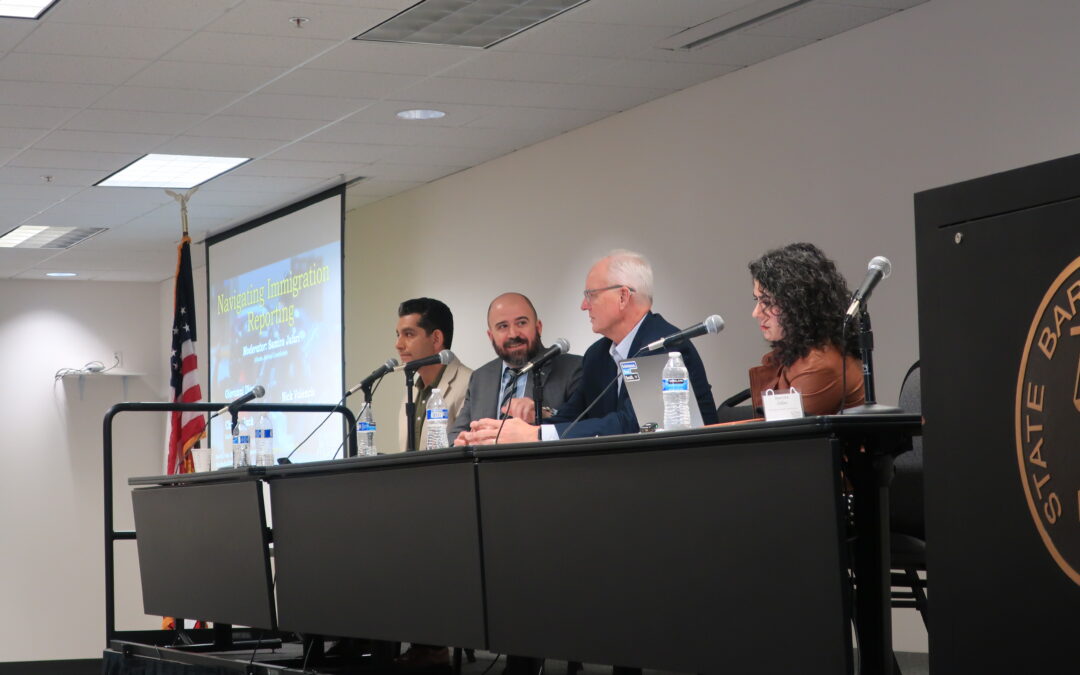
“We’re not speaking in hypotheticals anymore. We know journalists who have been deported or faced deportation,” said Samira Jafari, head of standards and practices at the Atlanta Journal-Constitution and moderator of the conference’s immigration panel. She shared the stage with attorney Giovanni Diaz, who represented Georgia-based immigration reporter Mario Guevara, deported to his native El Salvador in October. Guevara had lived in the U.S. for 20 years, had work authorization, and was on a path to obtaining a green card when he was arrested in June while reporting on a protest in metro Atlanta.
Diaz, immigration law expert Charles Kuck and independent journalist Nick Valencia talked about their experiences with chaotic immigration proceedings and overzealous enforcement.
Kuck described harassment of journalists and citizens who record law enforcement officers on patrol. U.S. Immigration and Custom Enforcement officers regularly allege that such recording impedes their work, he said. “What is impeding? Photographing and videoing law enforcement officers is not impeding.” Rather, the attorney noted, the public and the press have a constitutional right to record what law enforcement officers do in public places.
Three conference sessions delved into how shifts in the rule of law are upending long-accepted norms in courtrooms, law firms and newsrooms in Georgia and beyond. Two sessions offered a change of pace. Defense attorney Brian Steel gave an insider’s view of what it’s like to represent clients in high-profile cases. A panel of attorneys analyzed how lucrative name, image and likeness (N.I.L.) contracts for student athletes have transformed college sports.
Frank LoMonte, senior legal counsel at CNN, led the planning committee for the conference, which took place at the State Bar of Georgia headquarters. The gathering has remained relevant for more than three decades, he said, “because the law is such a powerful tool.”
The discussions that happened at the conference — on stage and on the sidelines — are critical in this moment, LoMonte said. “Working together to combat the current climate of skepticism and distrust starts with conversations like these.”
Check out the 2026 Bar, Media & Judiciary Conference agenda, a photo gallery from the event and more: gfaf.org/events/georgia-bar-media-judiciary-conference